Key Points
- Pakistan urges the international community to pressure Myanmar to stop violence against Rohingya Muslims and ensure their safe, dignified, and voluntary return.
- Pakistani Foreign Minister Khawaja Muhammad Asif calls the Rohingya crisis “a challenge to the conscience” of the world.
- Pakistan’s UN envoy Asim Iftikhar Ahmad highlights the humanitarian urgency and the need to implement pathways to citizenship for Rohingya.
- Pakistan commends Bangladesh and other host countries for sheltering Rohingya refugees and emphasises shared international responsibility.
- Turkey expresses commitment to help Rohingya refugees through humanitarian aid, including ambulances for Bangladesh.
- Rohingya community leaders in Pakistan decry global silence and call for accountability, noting China’s key influence.
- The international community’s credibility depends on securing justice, restoring dignity, and enabling Rohingya Muslims to rebuild their lives in Myanmar.
Why is Pakistan calling for international action on the Rohingya crisis?
As reported by Khawaja Muhammad Asif, Pakistan’s Foreign Minister, in a statement issued ahead of a conference of Pakistani diplomats and covered by Dawn, he described the Rohingya Muslims’ plight as “a challenge to the conscience of the world.” He underlined Islamabad’s commitment to providing humanitarian aid to displaced Rohingya amid renewed violence forcing tens of thousands of them to flee Myanmar. Political parties and clerics in Pakistan have expressed solidarity through rallies condemning Myanmar’s leadership, particularly Aung San Suu Kyi, over alleged massacres against Rohingya Muslims.
The violence began on 25 August when insurgents attacked police and led to harsh government military retaliation described as “clearance operations” by Myanmar authorities. The government claims that many casualties were terrorists. The renewed conflicts have exacerbated an already dire humanitarian crisis, with estimates of 400 deaths in the latest phase of violence.
What stance did Pakistan’s UN envoy take on Rohingya rights and repatriation?
According to reporting by the Associated Press of Pakistan (APP), Ambassador Asim Iftikhar Ahmad at the United Nations General Assembly’s high-level conference described the Rohingya situation as “one of the world’s most urgent humanitarian and human rights challenges.” He stressed the need for the international community to ensure Rohingya citizenship rights and their safe return to Myanmar.
He called for full implementation of the Advisory Commission on Rakhine State’s recommendations, led by former UN chief Kofi Annan, especially those related to citizenship pathways. Ambassador Ahmad insisted that only an inclusive Myanmar-owned process, supported by ASEAN, can create conditions for a peaceful and dignified return of Rohingya refugees from Bangladesh. He simultaneously praised Bangladesh and other host countries for sheltering the displaced population, relating Pakistan’s own experience with hosting millions of Afghan refugees.
Ambassador Ahmad’s remarks called on international partners, including the UN, ASEAN, and the Organisation of Islamic Cooperation (OIC), to work together to meet humanitarian needs and promote stability in Myanmar.
How is the international community responding to the Rohingya crisis?
Turkey’s Foreign Minister Mevlut Cavusoglu specified Turkey’s humanitarian role in addressing the crisis. Speaking in Baku before heading to Bangladesh, where he planned to visit refugee camps and oversee aid delivery, Cavusoglu affirmed Turkey’s commitment to not abandoning the Rohingya. He highlighted Turkey’s delivery of ambulances to Bangladesh and expressed hope for a lasting international solution to the crisis through collective efforts.
What concerns has the Rohingya community in Pakistan expressed about global silence?
According to a 2020 report by Anadolu Agency, Rohingya community leaders in Pakistan lament the international community’s muted response despite recognition by the UN of their persecution as the world’s most persecuted people. Noor Hussein Arakani, head of the Karachi-based Rohingya Solidarity Forum, criticised the lack of concrete action against Myanmar’s government for alleged genocide and called attention to China’s geopolitical role protecting Myanmar from international accountability through its UN Security Council veto power.
Arakani acknowledged support mainly from Turkey, Gambia, and some Muslim countries, praising Turkish President Recep Tayyip Erdogan for his vocal support. He urged China to view the issue as a humanitarian matter rather than a political one and highlighted that resolving the citizenship issue would win the community’s gratitude.
What is the scale of the Rohingya displacement and ongoing humanitarian needs?
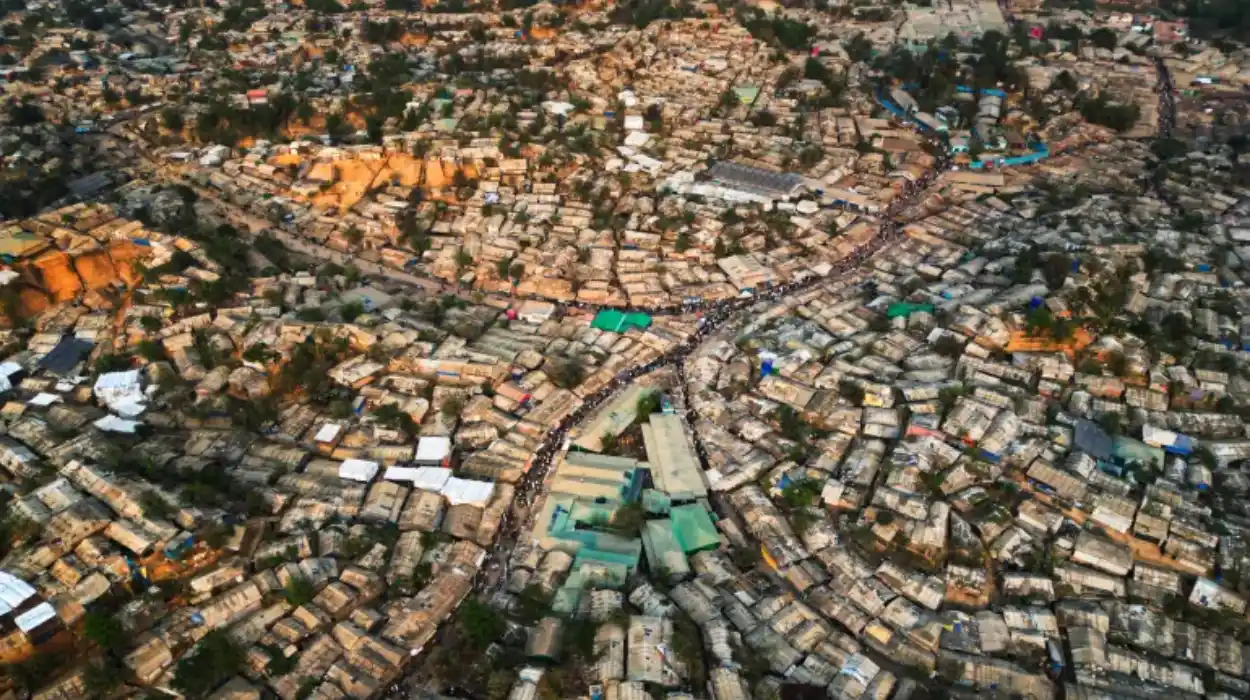
Since the 2017 military crackdown in Myanmar, over 700,000 Rohingya Muslims have fled mainly to Bangladesh, with nearly a million still living in overcrowded refugee camps. Renewed fighting in 2025 has displaced thousands more.
The UN General Assembly President Annalena Baerbock noted the plight of Rohingya refugees, many spending their childhood in tents, with 3.5 million Rohingya inside Myanmar needing humanitarian assistance. Bangladesh, hosting 1.1 million, cannot shoulder the burden indefinitely.
What future solutions does Pakistan advocate for the Rohingya crisis?
Pakistan’s approach, as emphasised by both Foreign Minister Khawaja Asif and UN envoy Asim Ahmad, is grounded in addressing root causes, citizenship rights, and inclusive dialogue respecting Myanmar’s sovereignty. They call for sustained international engagement to uphold justice and dignity, aligning with global partners to facilitate Rohingya return and rebuilding.