Key Points
- Bangladesh Chief Adviser Muhammad Yunus unveiled a seven-point plan at a high-level UN conference for Rohingya protection and repatriation.
- The Rohingya crisis began eight years ago with genocide and ongoing persecution in Myanmar’s Rakhine state.
- Bangladesh hosts approximately 1.3 million Rohingya refugees, including 150,000 who fled in the last 18 months due to intensified fighting.
- International funding for Rohingya aid is critically short, with only 37-38% of the required budget met in 2025.
- Rohingya refugees suffer dire living conditions, limited freedom, and ongoing threats in Bangladesh camps.
- The UN called for urgent measures: stopping violence, humanitarian relief, respect for rights, and creating conditions for safe repatriation.
- The international community urged to exert effective pressure on Myanmar and the Arakan Army to halt persecution.
- The global focus has shifted away from the Rohingya crisis despite ongoing violence and humanitarian needs.
What is Bangladesh’s seven-point plan for the Rohingya crisis?
As reported by Anadolu Ajansı journalist Muhammad Yunus, Chief Adviser of the Government of Bangladesh introduced a seven-point plan aimed at safeguarding the persecuted Rohingya minority at a high-level UN conference in New York on 29 September 2025. Yunus emphasised that the Rohingya crisis originated in Myanmar and stressed the need for international pressure on Myanmar and the Arakan Army to stop the persecution immediately and facilitate repatriation. He highlighted the lack of concrete initiatives and urgent funding, saying, “The world cannot keep the Rohingya waiting any longer”.
The seven-point plan calls for a clear roadmap to ensure voluntary, safe, dignified return of Rohingya refugees and a lasting solution to the crisis.
How many Rohingya are currently in Bangladesh, and what is their situation?
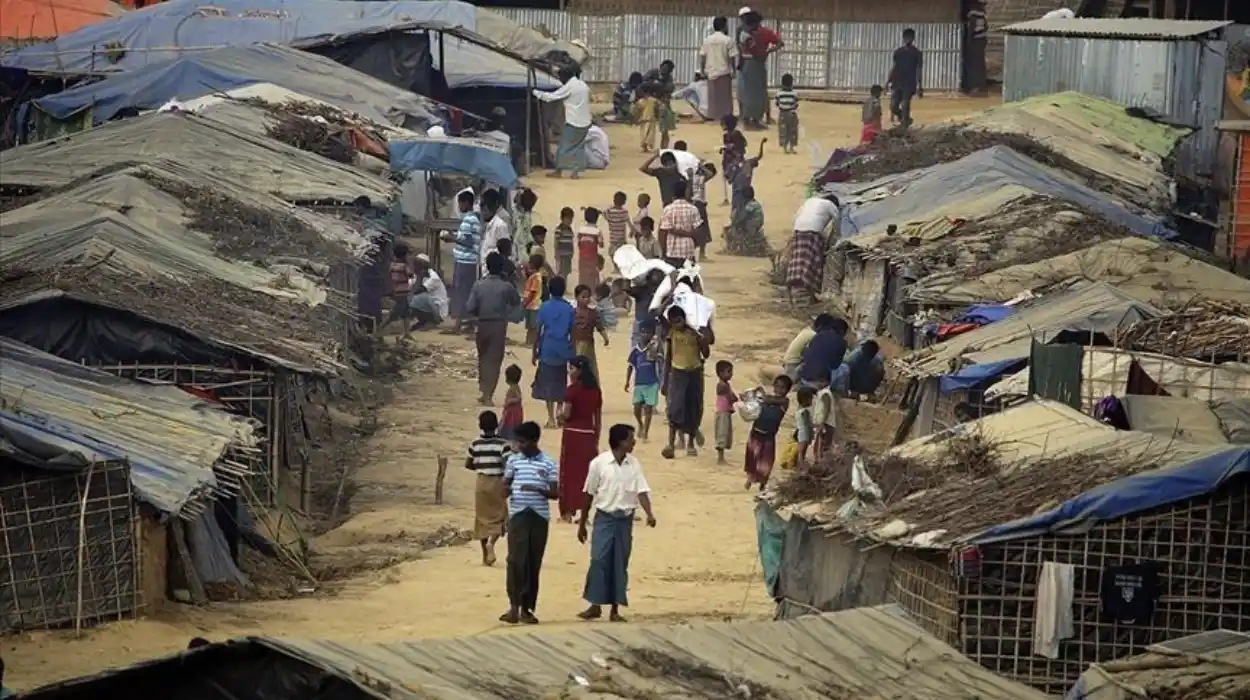
Bangladesh now shelters approximately 1.3 million forcibly displaced Rohingya, primarily in Cox’s Bazar district. According to Muhammad Yunus’ office, around 150,000 Rohingya have arrived since early 2024 amid increasing violence in Rakhine state, worsening the humanitarian situation.
The Rohingya refugees live under extreme hardship inside the world’s largest refugee camp, with restricted access to livelihoods, education, and freedom of movement imposed by the Bangladesh government. They survive on food rations equivalent to just $12 per month. According to a report by Rights for Rohingya (RFL Human Rights), they face ongoing security threats including harassment, forced recruitment by armed groups, trafficking, and gender-based violence inside the camps.
Why is international funding for the Rohingya aid falling short?
Aid funding for Rohingya refugees has plummeted with many donor countries reducing or withdrawing support. As of late August 2025, the Joint Response Plan to assist Rohingya refugees and Bangladesh’s government was only 37 percent funded in 2025, with a significant shortfall of $592.6 million, as detailed by RFL Human Rights.
Human Rights Watch highlighted that donors met only 38 percent of the $934 million requested this year for healthcare, food, nutrition, protection, and education services for Rohingya in Bangladesh. These shortfalls risk worsening the crisis, leaving refugees vulnerable with inadequate humanitarian assistance.
What are the ongoing threats facing Rohingya in Myanmar?
The Rohingya minority in Myanmar’s Rakhine state continues to face systemic oppression, human rights abuses, and violence. Since November 2023, conflict escalated between Myanmar’s military junta and ethnic armed groups, including the Arakan Army. Both sides have committed grave violations such as killings, abductions, torture, unlawful detention, forced recruitment, and widespread displacement.
UN High Commissioner for Human Rights Volker Türk underscored the deteriorating situation stating the conference should mark a turning point with urgent action, including ending violence, promoting reconciliation, and guaranteeing humanitarian relief.
How has the international community responded to the Rohingya crisis at the UN?
As described by UN and international media, the UN hosted its first-ever high-level conference on the Rohingya crisis on 29-30 September 2025 in New York, attended by representatives from 66 countries and organisations, including heads of state and government.
UN chief António Guterres, represented by Chef de Cabinet Courtenay Rattray, called for solidarity and solutions beyond stocktaking the status quo, warning the crisis cannot drag on for decades. The United States reaffirmed support for Rohingya and other Myanmar minorities suffering repression and violence. Human Rights Watch urged member states to acknowledge that conditions for safe returns do not exist and to avoid forced repatriations.
Despite these calls, experts like Dr. Azeem Ibrahim lament that the Rohingya are being forgotten amid shifting international attention. The global community is urged to be pragmatic and less diplomatic to find effective solutions to this protracted crisis.
What future steps were proposed at the UN conference?
Bangladesh’s Chief Adviser Muhammad Yunus urged the immediate formulation of a practical repatriation roadmap and effective pressure on Myanmar to halt persecution and stabilise Rakhine state. He described Bangladesh as a victim forced to bear heavy financial, social, and environmental costs due to the crisis.
The UN and human rights experts emphasised five priorities:
- Ending violence in Rakhine
- Facilitating constructive dialogue and reconciliation
- Ensuring respect for human rights
- Providing unhindered humanitarian aid
- Lifting restrictions on humanitarian and civilian access
These steps aim to create a conducive environment for the voluntary, safe, sustainable, and dignified return of Rohingya refugees.
How has Bangladesh been affected by hosting Rohingya refugees?
Bangladesh shoulders a disproportionate burden hosting the Rohingya, facing huge social, environmental, and financial pressures. According to Yunus, the cost of sheltering over a million refugees impacts local resources, infrastructure, and communities in Cox’s Bazar and surrounding areas.
The ongoing influx, with 150,000 new arrivals since early 2024, continues to strain humanitarian efforts amid declining international aid and resources.